Intraosseous (IO) access is a fast and reliable option when IV lines can’t be established. But choosing the right IO insertion or injection site is critical—different bones offer different success rates, flow, and safety.
Since anatomy varies by age, site selection must be adjusted for adults, children, and infants. In this guide, we’ll cover the most effective IO location for each group and what to consider when choosing where to insert.
IO Sites in Adults
1. Proximal Tibia
- Location: 2–3 cm below the tibial tuberosity, on the flat medial surface
- Why it’s preferred: Easy to locate and access, even in low-light or high-pressure settings
- Angle: 90 degrees to the bone
- Notes: Common first-line site in emergencies
2. Proximal Humerus
- Location: Greater tubercle of the humerus, with the arm adducted and internally rotated
- Why it’s used: Close to the heart, allows rapid fluid/medication delivery
- Challenge: Requires accurate positioning and more training
3. Sternum (Manubrium)
- Location: Upper portion of the sternum
- Use case: Requires a specific device (e.g., FASTResponder); mostly used in military or trauma settings
IO Sites in Pediatric Patients/ Children
1. Proximal Tibia
- Location: 1–2 cm below the tibial tuberosity, on the medial side
- Why it’s preferred: Most reliable and safe site in children
- Tip: Bone is thinner, so less insertion force is needed
2. Distal Femur
- Location: Just above the lateral condyle of the femur
- Use case: Particularly useful in infants and toddlers
- Notes: Provides a large, stable target in small children
3. Proximal Humerus
- Use case: Occasionally used, but more difficult due to anatomical variation
- Recommendation: Reserved for trained providers or older children
IO Sites in Infants
1. Proximal Tibia
- Location: Approximately 1–2 cm below the tibial tuberosity, just medial to the tibial shaft
- Why it’s preferred: Safe, superficial, and easy to stabilize
2. Distal Femur
- Location: Above the knee, midline of the thigh
- Use case: Alternative when tibial site isn’t available
3. Note: Avoid Sites Like Sternum or Humerus
- These are generally not recommended for infants due to size, fragility, and positioning difficulty.
Practice Tip
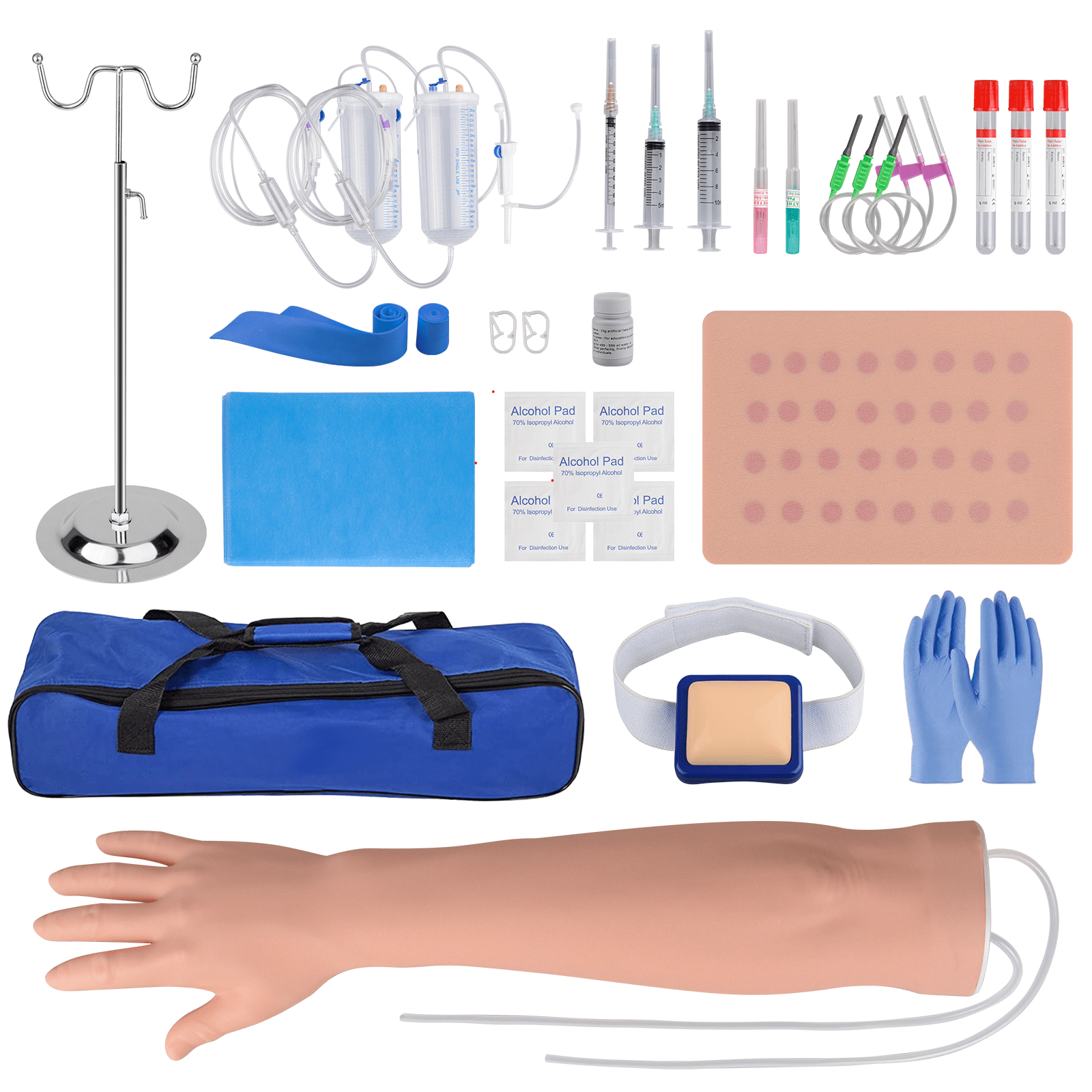
Using realistic models to practice site identification by age group significantly improves accuracy and confidence. Beginners are encouraged to start with a basic intraosseous infusion trainer to build foundational skills, then progress to age-specific IO trainers for more targeted and advanced practice.
Conclusion
Mastering the selection of the appropriate IO sites across different age groups is essential for safe and effective emergency care. While the proximal tibia remains the most common site for IO access and infusion. Remember, proficiency comes with practice. Keep practicing, stay curious, and trust in your growing abilities, because when seconds count, your expertise makes all the difference.
Learn More:
📚Related Articles