Introduction
Nowadays, more and more public places such as malls, schools, gyms, and community centers offer CPR training and awareness programs, giving everyday people a chance to learn and practice this life-saving skill. CPR isn’t just for medical professionals; anyone can learn it through training and make a real difference in an emergency. Let's learn more CPR basics.
What is CPR?
CPR (Cardiopulmonary Resuscitation) is an emergency life-saving technique that helps maintain basic blood circulation and oxygen supply when a person’s heart stops beating. It involves continuous chest compressions and, when needed, rescue breaths.
When the heart stops, the brain can suffer permanent damage within minutes due to lack of oxygen. CPR’s purpose is to buy critical time until professional medical help arrives and slow down this damage.
Modern guidelines emphasize the importance of high-quality compressions, including maintaining the right rate, depth, and a high chest compression fraction (CCF).
· Hands-Only CPR: Even if you only perform chest compressions without rescue breaths, you can still significantly improve survival chances. This method is especially suitable for untrained bystanders to start immediately.
· High-quality Compressions: Aim for 100–120 compressions per minute with adequate depth. Maintaining this standard is key to effective CPR.
Core Actions of CPR
The main goal of CPR is to maintain blood circulation and oxygen supply when a person’s heart stops. To achieve this, CPR mainly involves three key actions:
- Continuous and effective chest compressions
- Rescue breaths when needed
- Proper use of an AED (Automated External Defibrillator)
These core actions work together to keep the body functioning until professional help arrives.
1. Continuous and Effective Chest Compressions
Chest compressions are the most important and common action in CPR. They act as a substitute for the heart, pumping blood to the brain and vital organs. Even if the heart has stopped, chest compressions help maintain temporary blood circulation.
Chest compressions involve using both hands to press down on the center of the patient’s chest, creating pressure that pushes blood through the body.
Key points for effective chest compressions:
- Hand position: Center of the sternum (breastbone)
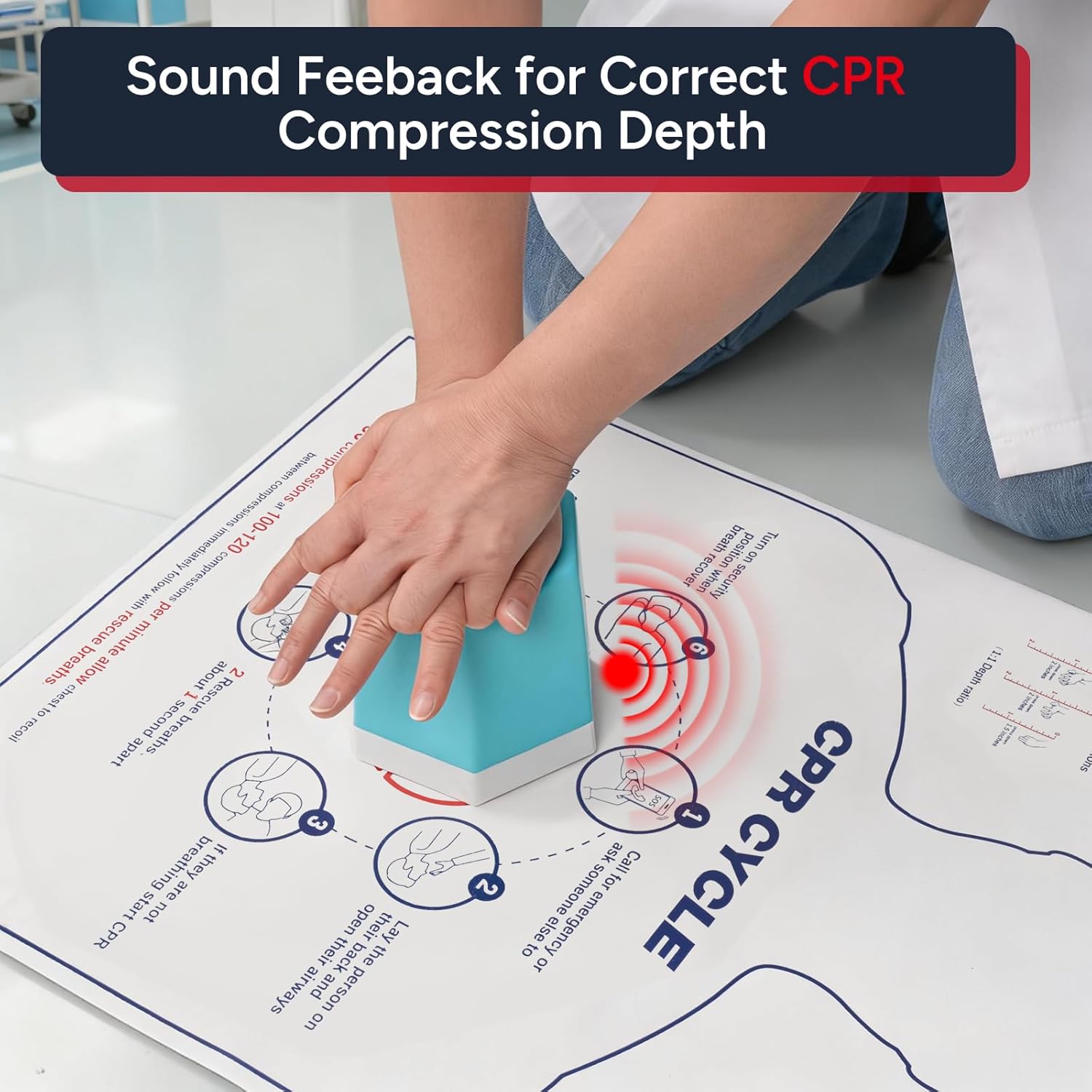
- Hand technique: See picture illustration below
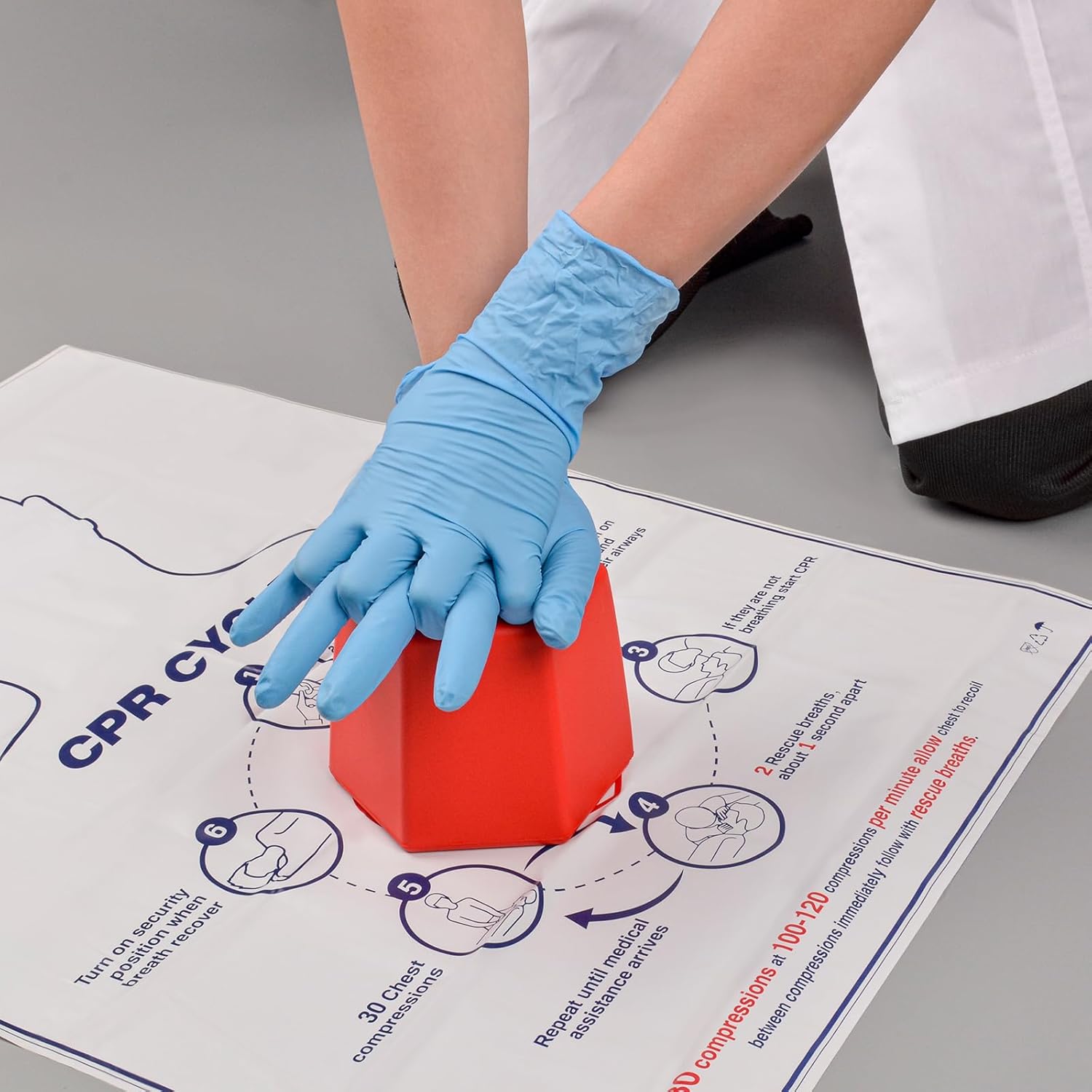
- Compression depth: About 5–6 cm for adults
- Compression rate: 100–120 compressions per minute
- Maintain continuity: Minimize pauses in compressions
- Full recoil: Allow the chest to fully rise after each compression to ensure effective circulation
2. Rescue Breaths When Needed
In some situations, such as drowning, children, or breathing problems caused by drugs, chest compressions alone may not provide enough oxygen. In these cases, rescue breaths can supply extra oxygen and work together with compressions more effectively.
For those trained in CPR, the recommended cycle is 30 chest compressions followed by 2 rescue breaths:
- Open the airway (tilt the head back and lift the chin)
- Give a breath lasting about 1 second, enough to make the chest rise slightly
- Repeat the cycle at a 30:2 ratio
If you haven’t received formal training, guidelines suggest performing Hands-Only CPR, which is still effective and easier to maintain.
3. Using an AED Alongside CPR
An AED (Automated External Defibrillator) is a device that can analyze heart rhythm and deliver a shock if needed, significantly improving the chances of survival for someone in cardiac arrest. While commonly used by medical staff and first responders, modern AEDs are simple and safe to operate, so even ordinary people without medical training can use them in an emergency.
The basic steps for using an AED are simple: turn it on → attach the pads → follow the voice prompts.
When performing CPR with an AED:
- Get the AED quickly and turn it on
- Attach the pads and follow the voice instructions
- Pause chest compressions while the AED analyzes the heart rhythm to ensure safety
- Resume chest compressions immediately after a shock—do not wait
High-quality chest compressions combined with timely AED use are considered the most effective “golden combination” for out-of-hospital cardiac arrest.
How to Train for CPR
To truly master CPR, the most effective approach is “theory + hands-on practice.” Here are some common training methods:
- Attend in-person CPR courses
Examples include:
- AHA (American Heart Association) courses
- Red Cross CPR courses
These courses usually cover compression techniques, airway management, and AED use.
- Practice with a CPR Training Model
There are now many types of CPR training models available on the market. In addition to the well-known training manikins, which are usually realistic upper-body models but can be expensive, there are also compact and portable CPR models that are suitable for home practice.
- Online learning support
- Watch instructional videos
- Practice along with rhythm audio
- Learn how techniques differ for different age groups
- Regular refresher training
CPR skills decline over time, so it is recommended to refresh your training every 1–2 years to maintain proficiency.
Summary
CPR is an important life-saving skill that anyone can learn. Regardless of medical background, through structured training and regular practice, everyone can improve their ability to save themselves and others. Learning CPR not only equips you with essential skills but also adds an extra layer of safety for yourself and those around you.
If you’re looking for an affordable and practical way to practice chest compressions, the SimCoach Hands-On Only CPR Training Tool is an ideal alternative to a full CPR manikin. It allows you to safely and effectively practice CPR at home or in the classroom.
🛒[Shop Now →]