In recent years, body piercings have become a popular way to express oneself. From ears and noses to belly buttons, each piercing has its own unique style and meaning. The Christina piercing is a relatively rare but increasingly recognized type of genital piercing. So, what exactly is a Christina piercing? In this article, we’ll give you a complete guide to this unique piercing.
What Is a Christina Piercing?
The Christina piercing is a female genital piercing located at the top of the vulva, where the outer labia meet, near the pubic bone. It is a relatively rare type of piercing, primarily for decorative purposes. Because of its higher position, this piercing is usually only subtly visible when wearing clothes or swimwear, giving it a low-key yet unique aesthetic.
The typical placement of a Christina piercing is shown in the image below (the exact position may vary slightly depending on individual anatomy):
.png?w=1000&h=1000)
The name “Christina piercing” doesn’t come from any anatomical term—it’s named after a person. It is generally believed that this piercing first appeared in the 1990s as modern body piercing culture developed. It was popularized by an early practitioner or case named Christina, and over time, the name stuck and became the commonly used term in the piercing community.
What Does a Christina Piercing Look Like?
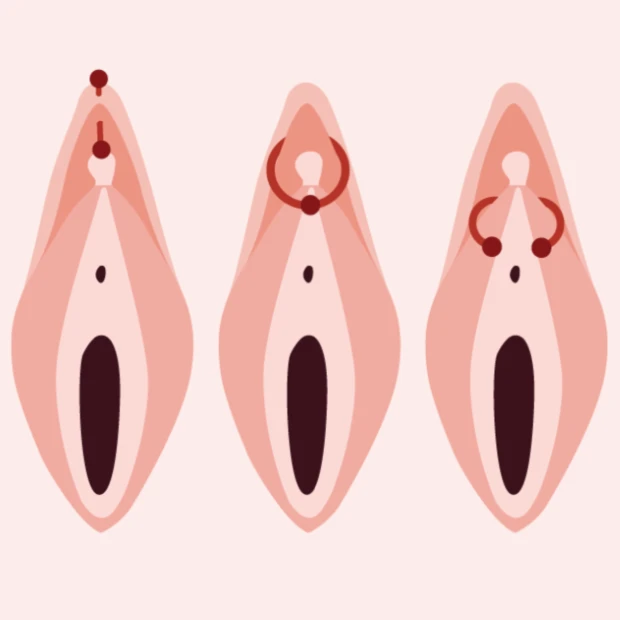
Other Female Genital Piercing Look
.jpg?w=1500&h=1500)
Why Do People Get the Christina Piercing?
There are many reasons why people choose a Christina piercing. For some, it’s a matter of aesthetics or a form of self-expression. Others may be curious about this type of piercing, and some even wonder if it’s meant to enhance sexual pleasure.
In reality, considering its anatomical location, the Christina piercing goes through surface skin and does not directly affect sensitive nerve areas. Therefore, it is generally not intended for sexual stimulation. In most cases, it is seen as a decorative piercing rather than a functional one.
Is the Christina Piercing Suitable for Everyone?
The Christina piercing is not suitable for everyone, as it requires certain anatomical conditions.
1. Skin thickness and tension
The piercing goes through the surface skin at the top of the outer labia. If the skin is too thin or lacks enough tension, the piercing may be more likely to migrate or be rejected.
2. Individual anatomy
Everyone’s vulva is different, and some people may not have enough skin to safely get a Christina piercing. Professional piercers usually assess each individual before performing the piercing to ensure safety.
3. Care and lifestyle considerations
Since this area is prone to friction, proper aftercare and daily habits can significantly affect healing. People considering a Christina piercing should be prepared to follow recommended care routines.
Christina Piercing Healing Time
The Christina piercing is a surface piercing, and it generally takes 4 to 12 months to fully heal. Healing time can vary depending on individual body type, skin thickness, and aftercare. During this period, mild redness or discomfort is normal, but if you experience persistent pain, severe swelling, or unusual discharge, you should consult a professional piercer or doctor.
Christina Piercing Care Tips
To help your piercing heal properly, the following care tips are very important:
- Keep it clean: Clean the piercing with sterile saline solution or a gentle piercing cleanser.
- Keep it dry: Avoid prolonged moisture around the piercing to prevent bacterial growth.
- Watch for friction: Be careful when sitting, exercising, or wearing tight clothing to avoid rubbing or pulling.
- Protect your clothes: During the early healing stage, use a pad or clean cloth to lightly protect the piercing and reduce friction.
- Avoid touching: Do not touch the piercing frequently to lower the risk of infection.
- Avoid sexual activity: It is recommended to pause sexual activity during healing to prevent infection or injury.
- Monitor for problems: If you notice persistent redness, severe pain, or abnormal discharge, consult a professional piercer or doctor.
Potential Risks of the Christina Piercing
The potential risks of a Christina piercing are similar to those of piercings in other areas, like the ears or nose, such as redness, infection, slow healing, or allergic reactions to jewelry. However, since it is located near the female genital area, extra care is needed to maintain hygiene and avoid friction. Keeping the area clean, minimizing rubbing, and following the guidance of a professional piercer are especially important to reduce irritation and ensure proper healing.
Does the Christina Piercing Hurt a Lot?
The Christina piercing is usually considered moderate to slightly above moderate in terms of pain, since it only goes through surface skin and does not touch the clitoris or deeper nerves. The general pain comparison for common piercing locations (from least to most painful) is:
Earlobe < Nose/Eyebrow < Christina Piercing < Nipple/Clitoral Piercing
Pain levels can vary depending on each person’s body and sensitivity. Choosing an experienced professional piercer and staying relaxed can help make the piercing process smoother and more comfortable.
Does the Christina Piercing Require Higher Skill from Piercers?
Yes, the Christina piercing requires more skill from piercers compared to common piercings like those on the ears or nose. The main reasons include:
- Unique location: The piercing is at the top of the vulva, where the outer labia meet. The skin area is limited, so the angle and depth need to be precise.
- Surface piercing characteristics: Surface piercings are prone to migration or rejection, so the piercer must ensure the placement and angle are correct to reduce risks.
- Healing challenges: Because the piercing takes a long time to heal and requires careful aftercare, improper technique can lead to infection or poor healing.
- Individual anatomy: Every person’s vulva is different, so piercers need to evaluate and adjust based on individual anatomy.
In summary, Christina piercings require a high level of skill and experience compared to typical ear or nose piercings.
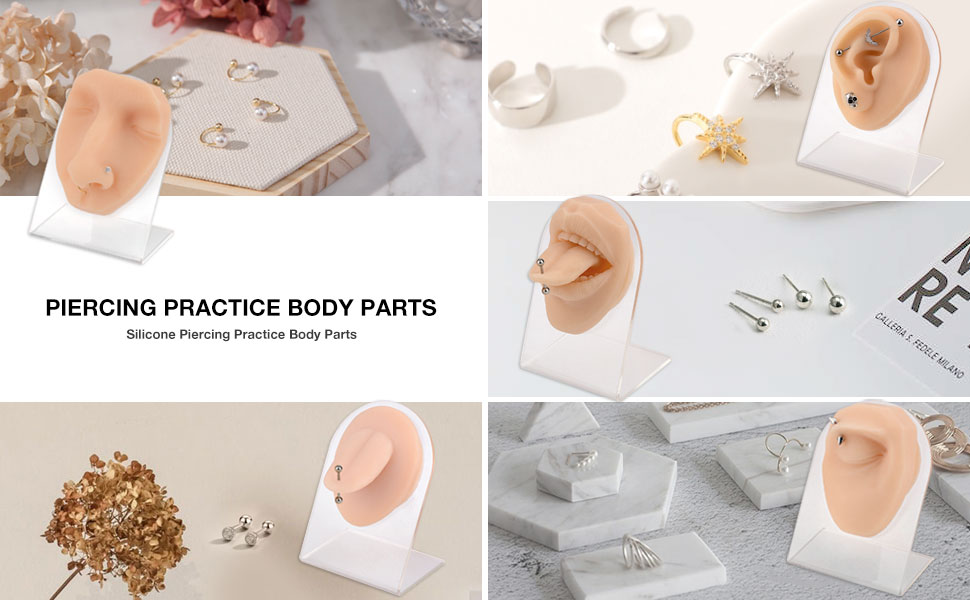
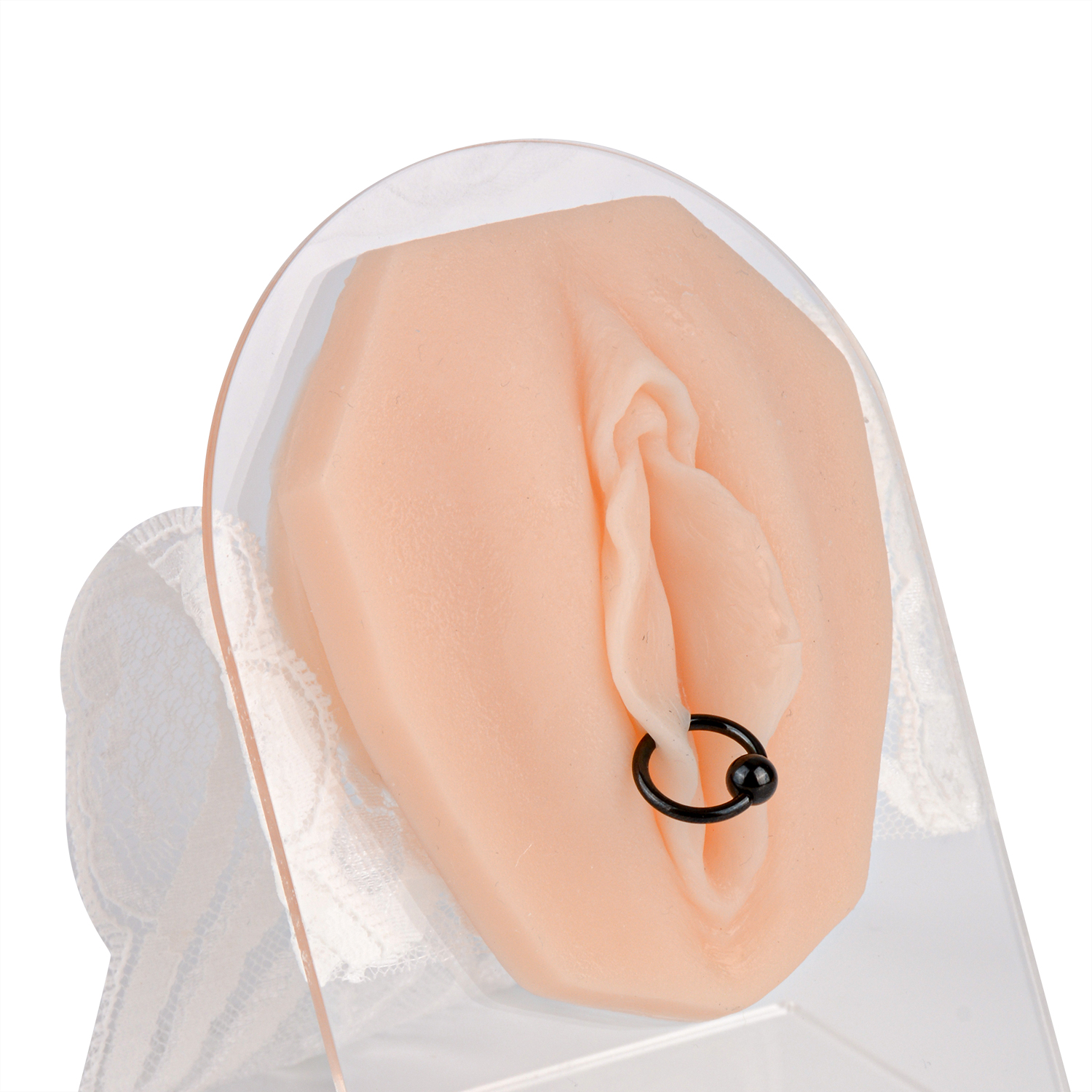
We also highly recommend SimCoach’s silicone piercing body parts, designed for both practice and jewelry display, including female genital models. Piercers and enthusiasts can use these models to safely practice Christina piercings and other female genital piercings, as well as display piercing jewelry conveniently.

Summary
The Christina piercing is loved and appreciated by many women for its unique placement and subtle aesthetic. Whether you are someone considering getting a Christina piercing or a piercer preparing to learn this technique, it’s important to understand the piercing’s location, aftercare, potential risks, and healing time. Knowing these details can help ensure a safer and smoother piercing experience and provide a solid foundation for professional practice.