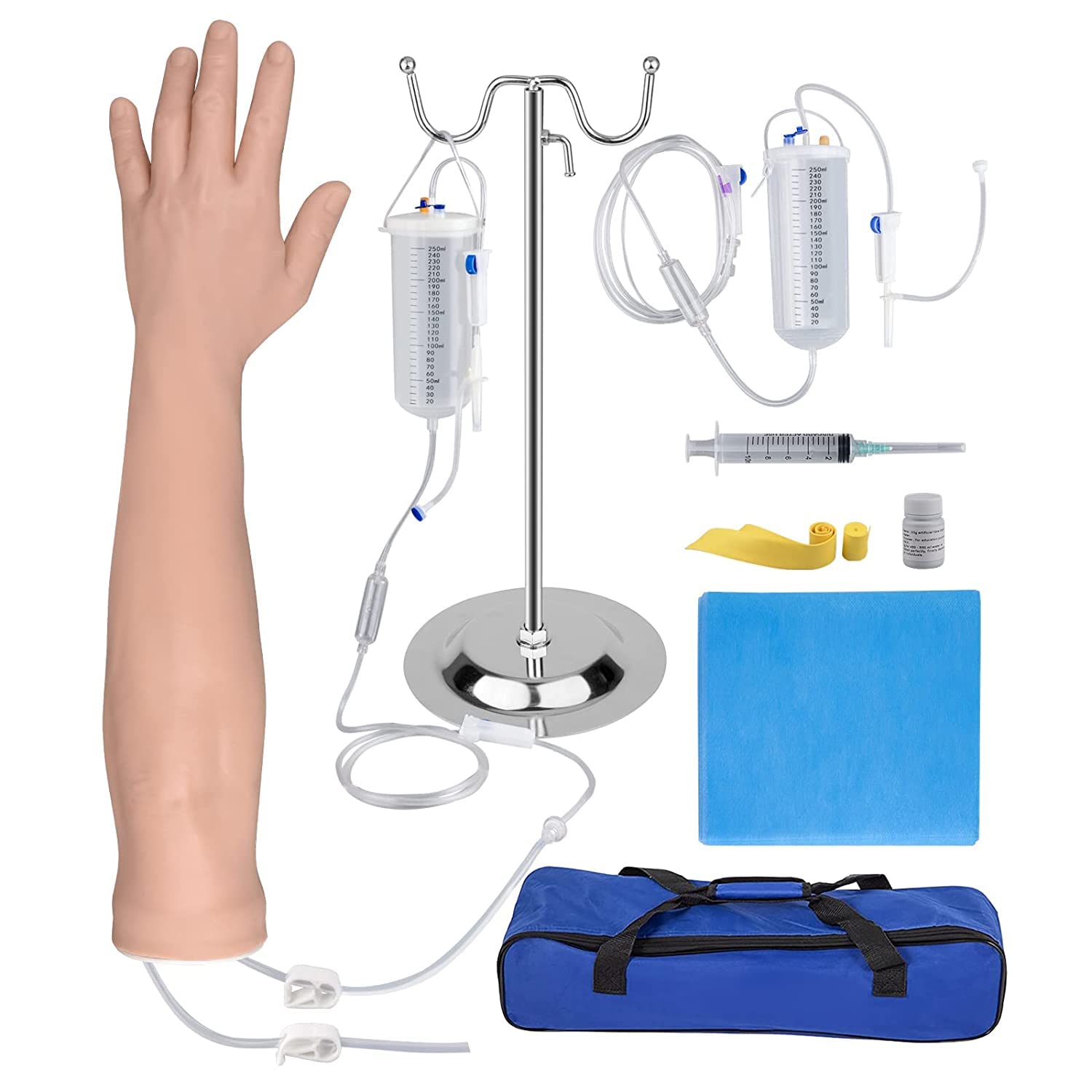
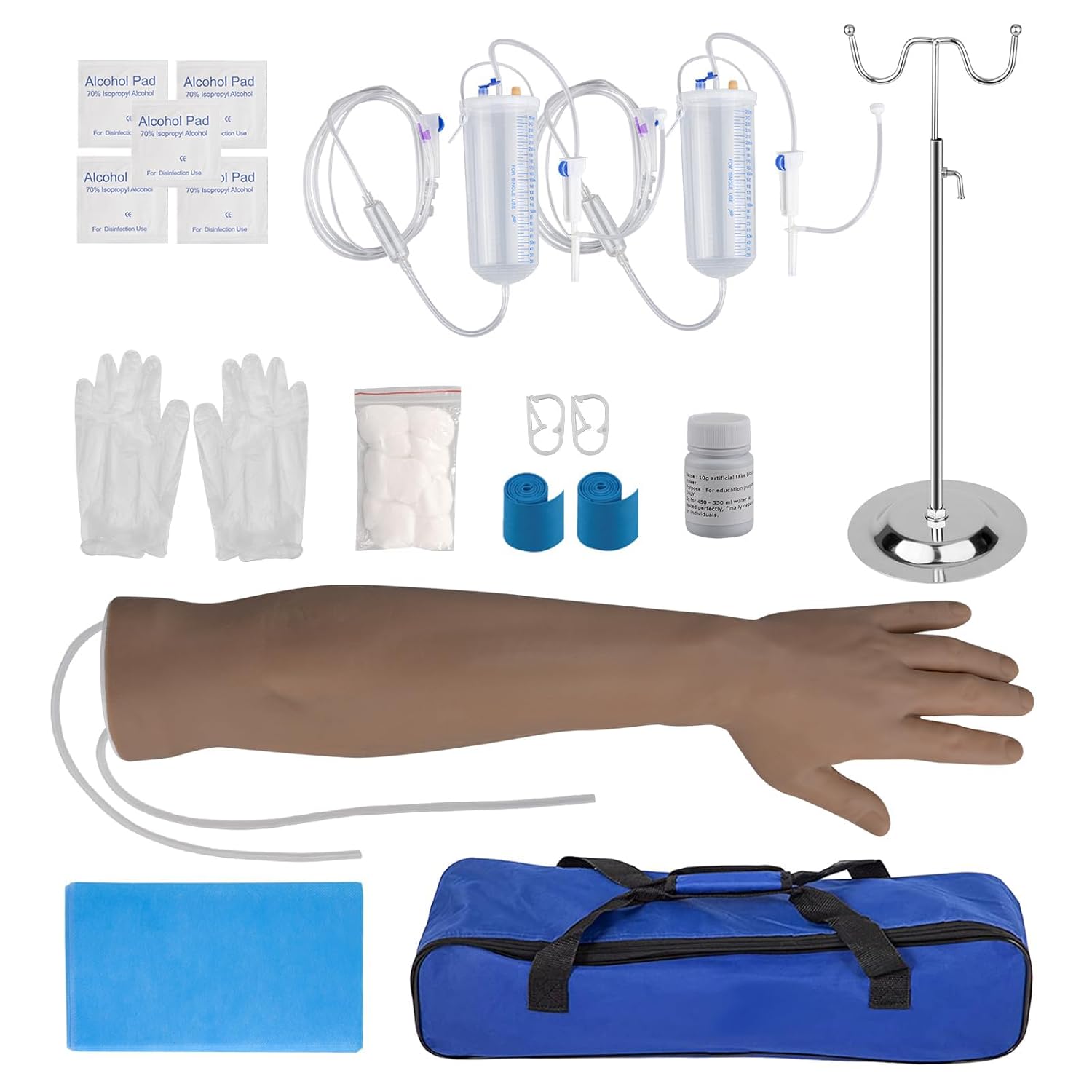
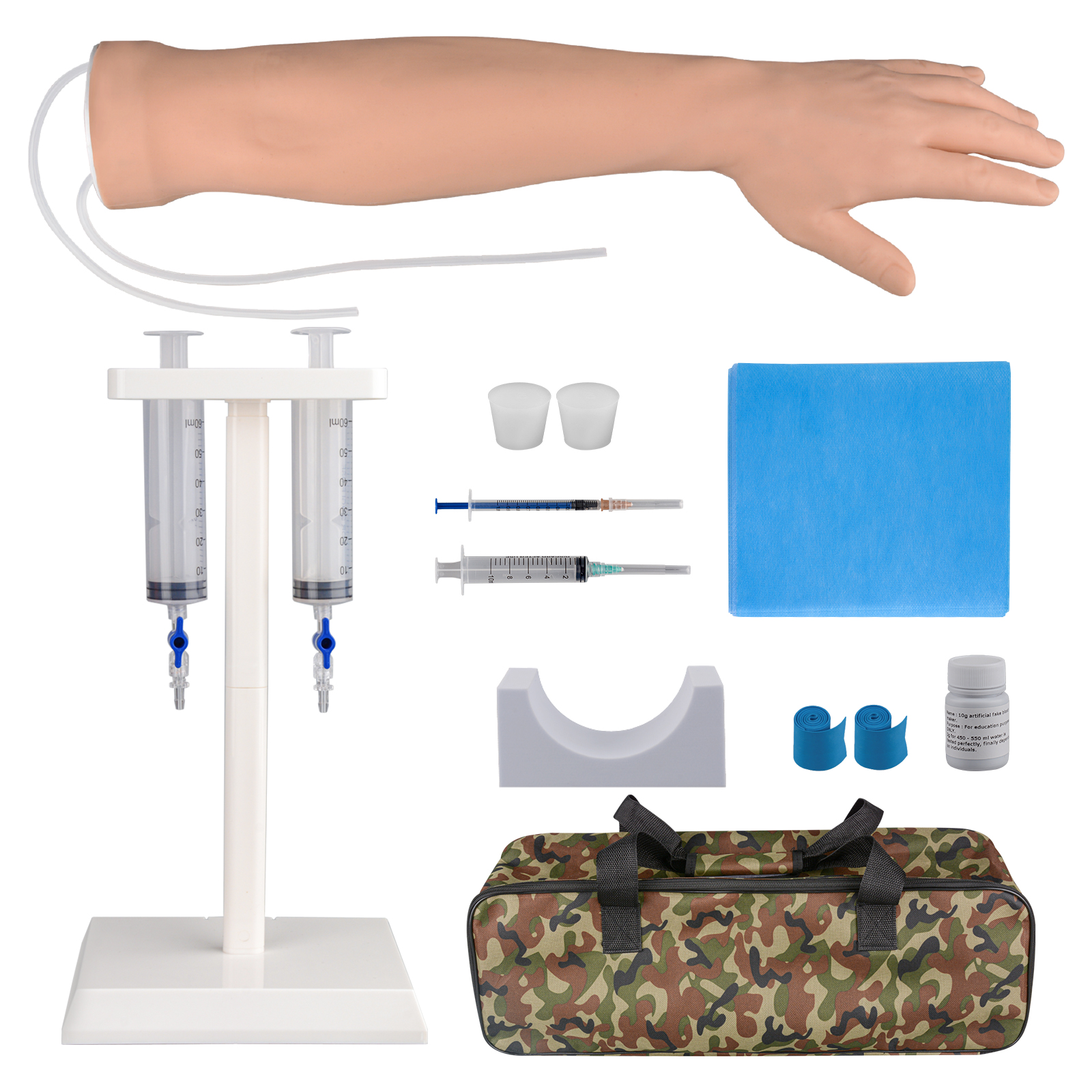
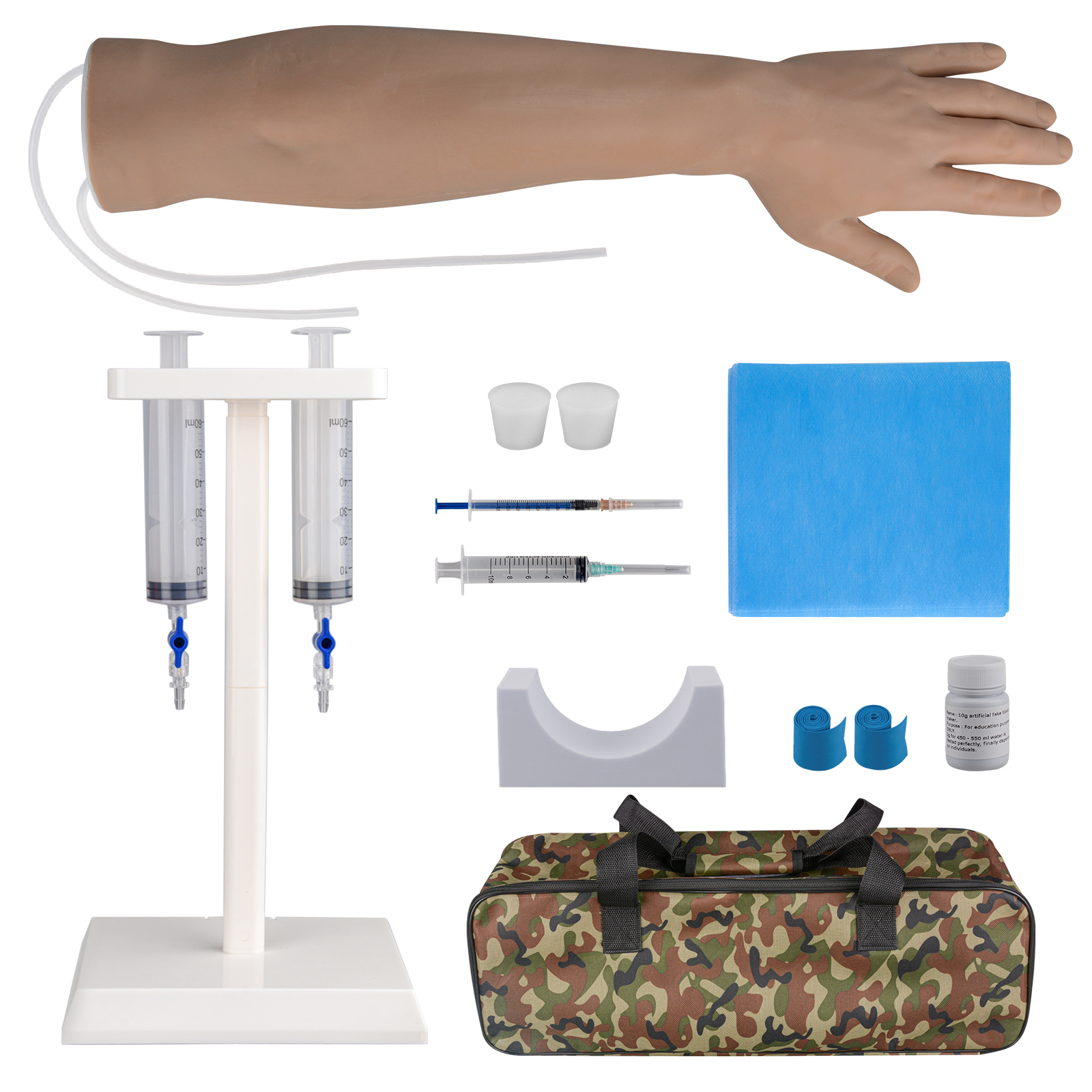
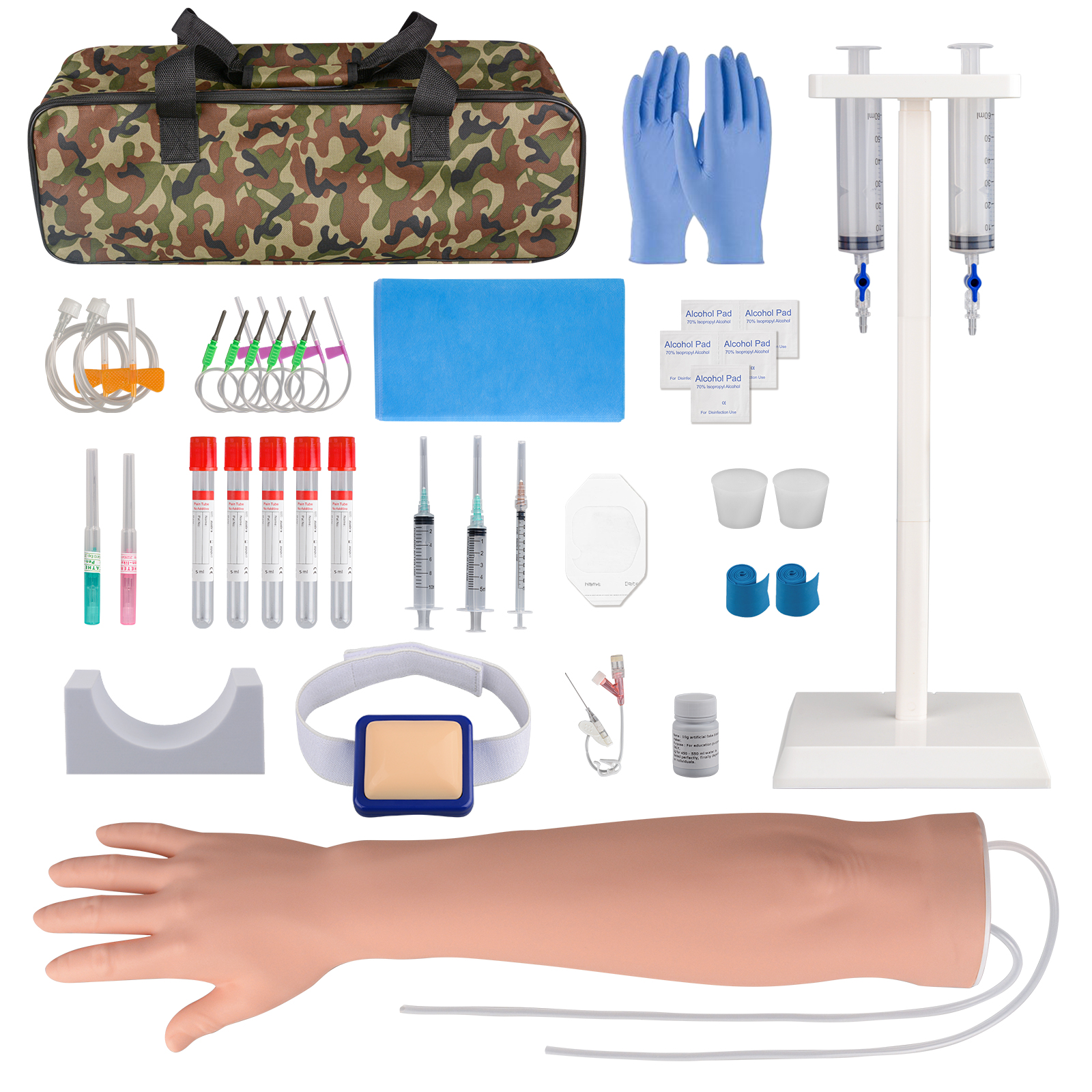
Les injections intramusculaires (IM) sont couramment administrées dans plusieurs groupes musculaires, et le site d'injection dorsogluteal a traditionnellement été l'un des emplacements les plus utilisés. Bien que de nombreux éducateurs en santé préfèrent désormais la région ventroglutéale pour une sécurité améliorée, la technique d'injection IM dorsogluteale est toujours enseignée et utilisée dans de nombreux contextes cliniques.
Comprendre les repères d'injection dorsogluteale appropriés, l'angle d'injection, le placement de l'aiguille et les considérations de sécurité est essentiel pour les infirmières, les étudiants en médecine et les éducateurs cliniques. Ce guide explique comment localiser le site d'injection dorsogluteale, effectuer la technique en toute sécurité et réduire le risque de blessure au nerf sciatique.
Qu'est-ce qu'une injection dorsoglutéale ?
Une injection dorsogluteale est un type d'injection intramusculaire (IM) administrée dans la zone musculaire gluteale de la fesse. Plus précisément, l'injection est placée dans le quadrant supérieur externe de la fesse pour réduire le risque d'endommager les nerfs et les vaisseaux sanguins majeurs.
Depuis des décennies, le site d'injection dorsogluteal est l'un des emplacements les plus couramment utilisés pour les injections intramusculaires car cette zone offre :
- Une masse musculaire importante
- Bonne absorption des médicaments
- Capacité d'injection de volumes plus importants
- Accès relativement facile chez les patients adultes
Cependant, le site dorsogluteal est devenu de plus en plus controversé dans l'éducation des soins infirmiers et la pratique clinique à partir de la fin du 20ème siècle, en particulier pendant les années 1990 et le début des années 2000. La principale préoccupation est que l'identification incorrecte des repères anatomiques peut augmenter le risque de lésion du nerf sciatique. Pendant cette période, de plus en plus de littérature infirmière fondée sur des preuves a commencé à recommander le site ventrogluteal comme une alternative plus sûre pour les injections intramusculaires car il est plus éloigné du nerf sciatique et des principaux vaisseaux sanguins.
Malgré ce changement, de nombreux infirmiers et professionnels de la santé expérimentés ont continué à utiliser le site dorsogluteal car il avait été traditionnellement enseigné pendant des décennies et restait familier dans la pratique clinique. Même aujourd'hui, l'approche dorsogluteale est encore utilisée dans certains établissements de santé, en particulier pour certains médicaments intramusculaires à action prolongée.
Anatomie du site d'injection dorsogluteal
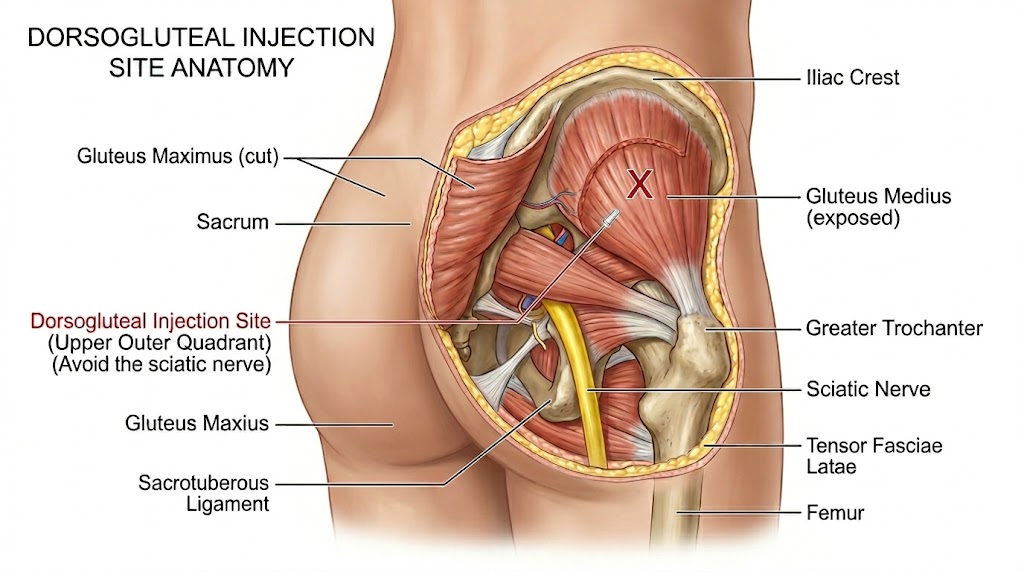
Le site d'injection dorsogluteal est situé dans la région gluteale postérieure du corps et implique principalement le muscle grand fessier. En tant que plus grand muscle du corps humain, le grand fessier offre une profondeur tissulaire substantielle pour les injections intramusculaires et joue un rôle majeur dans le mouvement et la stabilité du bas du corps. Ce muscle est responsable de :
- extension de la hanche
- Posture droite
- mouvements de marche et d'escalade
- Stabilisation du bassin pendant le mouvement
Sous le grand fessier se trouve le moyen fessier, qui aide à stabiliser le pelvis pendant la station debout et la marche.
Comprendre la relation entre ces couches musculaires est important lors de l'apprentissage de la technique d'injection dorsogluteale, car la profondeur de l'injection et le placement de l'aiguille affectent si le médicament atteint le tissu musculaire visé.
La région dorsogluteale est également entourée de plusieurs repères anatomiques importants, y compris :
- La crête iliaque
- Le sacrum
- Le grand trochanter du fémur
Pour les étudiants en santé, apprendre l'anatomie du site d'injection dorsogluteale ne consiste pas seulement à mémoriser les repères, mais aussi à comprendre comment la structure musculaire, la profondeur des tissus et l'anatomie du patient influencent la pratique sécuritaire des injections intramusculaires.
Comment localiser le site d'injection dorsoglutéal
Il est essentiel de localiser le bon site d'injection dorsogluteale pour réduire le risque de blessure au nerf sciatique. L'injection doit toujours être placée dans le quadrant supérieur externe de la fesse.
Étape 1 : Positionner correctement le patient
Demandez au patient de :
- Allongez-vous sur le côté avec le côté de l'injection tourné vers le haut, ou
- Allongez-vous sur le ventre avec les pieds légèrement tournés vers l'intérieur.
Cette position expose clairement la zone des fessiers et rend le muscle plus facile d'accès.
Étape 2 : Identifier la zone des fesses
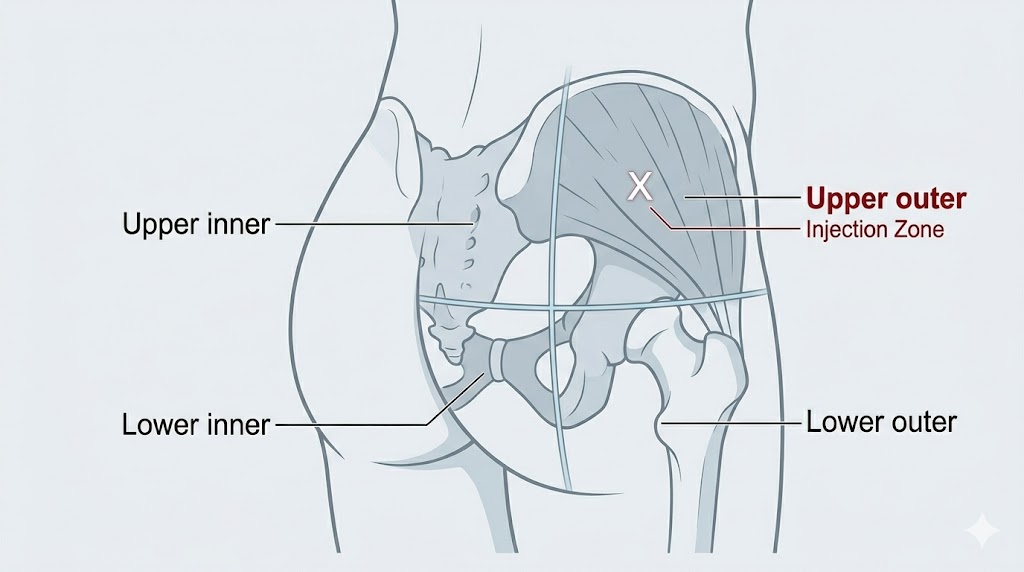
La méthode la plus courante pour localiser le site d'injection est d'utiliser la méthode des quadrants.
Exposez une fesse complètement afin que les repères soient visibles. Évitez de localiser le site à travers les vêtements. Utilisez vos yeux pour diviser mentalement la fesse en quatre sections égales :
- Extérieur supérieur
- intérieur supérieur
- extérieur inférieur
- intérieur inférieur
Le site d'injection dorsogluteal correct est la section supérieure externe.
Taille de l'aiguille et angle d'injection
Taille de l'aiguille
Choisir la bonne taille d'aiguille est important pour une injection intramusculaire dorsogluteale réussie. Une aiguille trop courte peut ne pas atteindre le muscle, tandis qu'une aiguille trop longue peut causer un traumatisme tissulaire inutile.
Chez la plupart des adultes, la longueur d'aiguille couramment recommandée pour une injection dorsogluteale est :
- 1 à 1,5 pouce pour les adultes de poids moyen
- Des aiguilles plus longues peuvent être nécessaires pour les patients ayant un tissu adipeux plus épais.
Les calibres à aiguilles les plus couramment utilisés sont :
- Calibre 20 à 22 pour les médicaments plus épais ou à base d'huile
- Calibre 23–25 pour les médicaments moins visqueux
La composition corporelle du patient doit toujours être prise en compte avant de sélectionner la longueur de l'aiguille. Les individus ayant un pourcentage de graisse corporelle plus élevé peuvent nécessiter une aiguille plus longue pour s'assurer que le médicament atteigne le muscle glutéal au lieu de rester dans le tissu sous-cutané.
Angle d'injection
L'injection doit être administrée à un angle de 90 degrés par rapport à la peau. Un angle d'insertion perpendiculaire aide à délivrer le médicament directement dans le tissu musculaire et améliore l'absorption du médicament.
Lors de l'insertion :
- Étirez légèrement la peau pour stabiliser la zone.
- Insérer l'aiguille en un seul mouvement contrôlé
- Évitez de changer de direction une fois que l'aiguille pénètre dans le tissu.
Si une résistance significative, une douleur intense ou un engourdissement inhabituel se produisent lors de l'insertion, arrêtez l'injection et réévaluez le site avant de continuer.
Erreurs courantes à éviter lors des injections dorsoglutéales
Même lorsque le site d'injection dorsogluteal correct est identifié, de petites erreurs techniques peuvent encore augmenter le risque de douleur, de mauvaise administration du médicament ou de complications liées à l'injection. Voici quelques-unes des erreurs les plus courantes observées lors de la pratique de l'injection intramusculaire dorsogluteale.
1. Injection en dehors du quadrant supéro-externe
L'une des erreurs les plus graves consiste à placer l'injection trop bas ou trop près du centre de la fesse. Cela augmente le risque de toucher le nerf sciatique et peut provoquer :
- Douleur aiguë et irradiante
- Engourdissement
- picotements
- faiblesse musculaire
Utilisez toujours la méthode du quadrant au lieu d'estimer le site visuellement.
2. Utiliser une aiguille trop courte
Une aiguille courte peut ne pas atteindre le muscle glutéal, en particulier chez les patients ayant un tissu adipeux plus épais. Lorsque le médicament est accidentellement déposé dans la graisse sous-cutanée au lieu du muscle, cela peut entraîner :
- Absorption réduite du médicament
- Irritation au point d'injection
- Grosses bosses douloureuses
- Effet retardé du médicament
La longueur de l'aiguille doit être choisie en fonction de la composition corporelle du patient plutôt que d'utiliser la même aiguille pour chaque patient.
3. Injection dans un muscle tendu
Si le muscle glutéal est tendu pendant l'injection, le patient peut ressentir :
- Douleur accrue
- résistance musculaire
- Difficulté à insérer l'aiguille en douceur
Les patients doivent rester détendus et éviter de contracter les fessiers pendant la procédure.
4. Mauvaise préparation de la peau
Injecter avant que l'alcool ne sèche complètement peut provoquer des picotements et un inconfort supplémentaires. Après avoir nettoyé la peau :
- Laisser sécher complètement à l'air libre.
- Évitez de toucher à nouveau le site nettoyé avant l'injection.
Une préparation adéquate du site aide à réduire le risque de contamination lors de la technique d'injection dorsogluteale.
Pratique de l'injection dorsogluteale avec un modèle d'entraînement des muscles fessiers
Les outils de simulation médicale sont largement utilisés pour enseigner des techniques d'injection dorsogluteale sûres.Le modèle d'entraînement pour injection musculaire glutéale avec point de repère pour l'injection dorsoglutealepeut aider les étudiants :
- S'exercer à identifier les points de repère
- Améliorer le contrôle de l'angle de l'aiguille
- Développer la mémoire musculaire
- Instaurer un climat de confiance avant l'interaction avec le patient
La formation pratique par simulation est particulièrement précieuse pour les écoles de soins infirmiers, l'éducation EMS et les laboratoires de compétences cliniques.
Résumé
Une fois que vous comprenez les repères anatomiques corrects et l'angle d'injection pour une injection dorsogluteale, la procédure devient beaucoup plus facile qu'elle n'en a l'air au départ. À ce stade, la clé est une pratique constante grâce à une utilisation répétée d'unentraîneur d'injection dorsoglutealepour renforcer l'identification correcte des repères, le positionnement des mains et le contrôle de l'aiguille. Avec une pratique continue, la précision et la confiance dans la réalisation d'une injection intramusculaire dorsogluteale s'amélioreront progressivement au fil du temps.
Si vous souhaitez pratiquer l'injection intramusculaire dorsogluteale ou d'autres compétences en injection, nous vous recommandons vivement notrekits d'entraînement à l'injection et modèles de formation, conçu pour vous aider à renforcer votre confiance grâce à une formation réaliste et pratique.
📝Article connexe :
.png?w=1672&h=941)