



Introduction
If you're looking for a healthcare career that combines technology with patient care, becoming an ultrasound technician could be a great option. With competitive earning potential, growing demand, and a relatively short educational pathway, sonography is an appealing choice for both new students and those considering a career change.
If you're wondering how to become an ultrasound technician, the typical path involves completing a sonography program, gaining supervised clinical experience, and earning professional certification. For many students, an associate degree is a practical starting point.
This guide walks you through the steps to becoming an ultrasound technician, from choosing the right school and understanding education costs to obtaining certification. We'll also look at how long it takes, how much ultrasound techs make, and what to expect from a career in sonography.
What Does an Ultrasound Technician Do?
An ultrasound technician, also known as a diagnostic medical sonographer, uses specialized imaging equipment to produce images of organs, tissues, blood vessels, and other structures inside the body. These images help physicians diagnose and monitor a wide range of medical conditions.
Although ultrasound is commonly associated with pregnancy, its applications extend far beyond prenatal care.
Typical responsibilities of an ultrasound technician include:
- Reviewing patients' medical histories and preparing them for examinations.
- Explaining ultrasound procedures and positioning patients.
- Operating ultrasound equipment and adjusting imaging settings.
- Capturing images and taking measurements of anatomical structures.
- Identifying imaging findings that require further review.
- Providing images and relevant findings to physicians for interpretation.
- Maintaining imaging equipment and following infection control procedures.
Sonographers may specialize in abdominal, obstetric and gynecologic, breast, cardiac, vascular, or musculoskeletal ultrasound. Each specialty requires different anatomical knowledge and scanning techniques.
How to Become an Ultrasound Technician: Step by Step
Step 1: Earn a High School Diploma or GED
The first step is to complete high school or obtain a GED. If you're still in high school, courses in biology, anatomy, mathematics, and physics can help prepare you for sonography school.
Some ultrasound programs also require college-level prerequisite courses before admission. These may include anatomy and physiology, medical terminology, physics, and mathematics.
Admission requirements vary by school, so it's worth checking them early, particularly if you're planning a career change.
Step 2: Complete an Accredited Sonography Program
There are several educational pathways to becoming an ultrasound technician. The right one depends on your previous education, career goals, and available time.
| Education Path | Typical Duration | Best Suited For |
| Associate Degree in Sonography | Around 2 years | Students entering the healthcare field |
| Bachelor's Degree in Sonography | Around 4 years | Students seeking a broader academic education |
| Sonography Certificate Program | Often 12–24 months | Individuals with relevant education or healthcare experience |
An associate degree in diagnostic medical sonography is a common entry-level pathway. These programs combine classroom instruction, laboratory practice, and supervised clinical training.
Certificate programs may offer a shorter route for people who already have a relevant degree or healthcare background. However, admission and certification eligibility requirements vary considerably.
When comparing programs, look for those accredited by the Commission on Accreditation of Allied Health Education Programs (CAAHEP). Graduating from an accredited program can provide a more straightforward route to professional certification.
Step 3: Complete Your Sonography Coursework
Ultrasound tech school involves more than learning how to operate an ultrasound machine. Students need to understand human anatomy, recognize normal and abnormal imaging appearances, and learn how ultrasound waves interact with different tissues.
Common subjects include:
- Human anatomy and physiology
- Medical terminology
- Ultrasound physics and instrumentation
- Cross-sectional anatomy
- Sonographic pathology
- Patient care and safety
- Diagnostic imaging techniques
Ultrasound physics can be particularly challenging for some students, as it involves concepts such as sound frequency, attenuation, reflection, and image resolution. Understanding these principles helps sonographers adjust equipment settings and obtain useful diagnostic images.
Step 4: Gain Hands-On Clinical Experience
Clinical training is an essential part of becoming an ultrasound technician. Knowing how to identify an anatomical structure in a textbook is quite different from locating it on a live ultrasound image.
During supervised clinical placements, students learn how to work with patients, handle ultrasound equipment, select appropriate transducers, obtain diagnostic images, and adapt their scanning techniques to different body types and clinical situations.
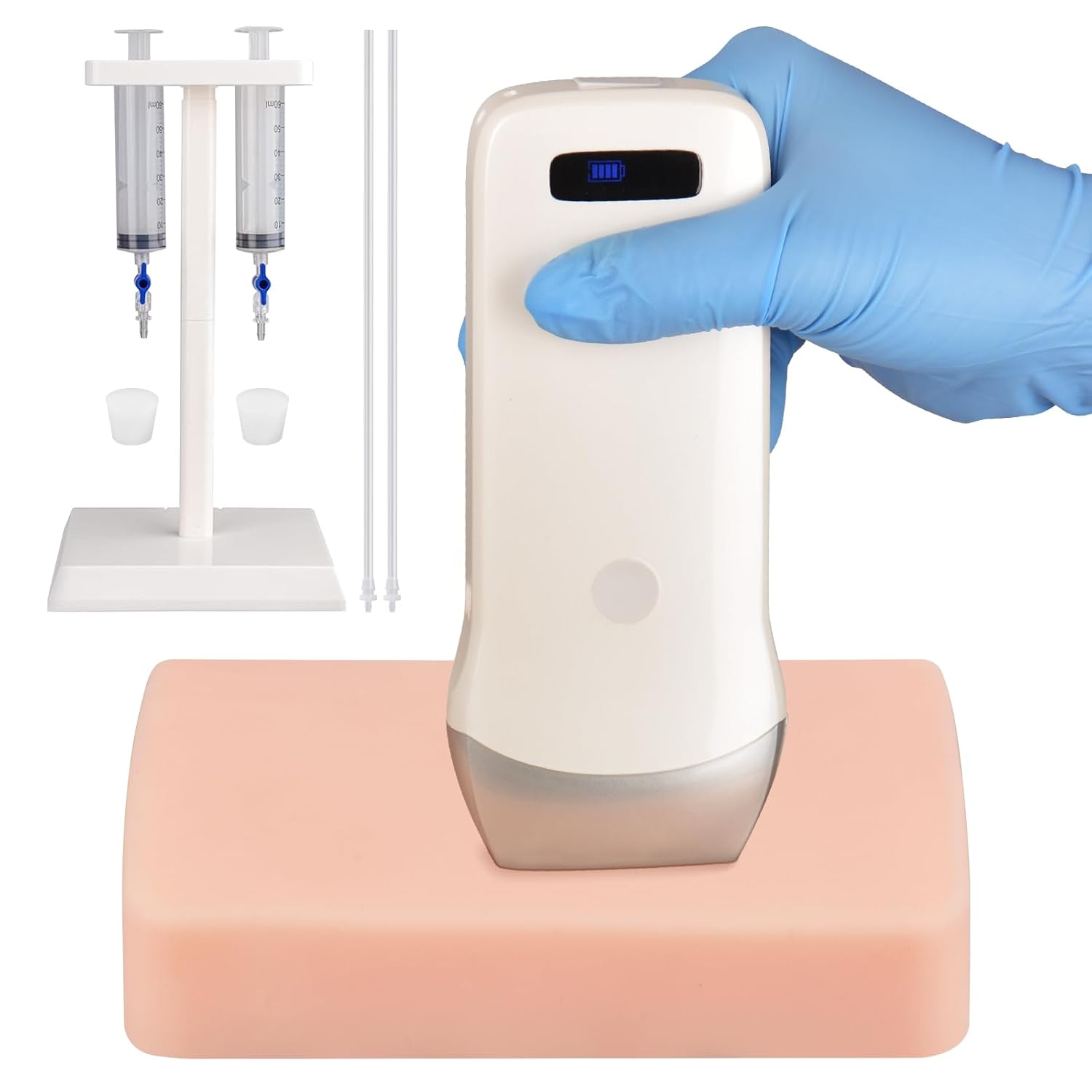
Before and alongside working with patients, students may also practice in simulation labs using ultrasound training phantoms. These models provide a controlled environment for developing probe handling, image optimization, anatomical identification, and hand-eye coordination.
Some specialized ultrasound training phantoms also allow learners to identify simulated lesions and practice ultrasound-guided procedures when relevant to their clinical training.
Simulation is a useful addition to sonography education, but it does not replace the supervised clinical experience required by educational programs and certification organizations.
Step 5: Obtain Ultrasound Technician Certification
Once you've completed the necessary education and clinical training, the next step is to obtain professional certification. Many healthcare employers require or prefer candidates who hold a recognized sonography credential.
One of the most widely recognized certification organizations in the United States is the American Registry for Diagnostic Medical Sonography (ARDMS).
Depending on your area of specialization, you may pursue credentials such as:
- RDMS (Registered Diagnostic Medical Sonographer): Covers specialties such as abdominal, breast, pediatric, and obstetric and gynecologic sonography.
- RDCS (Registered Diagnostic Cardiac Sonographer): Focuses on cardiac ultrasound.
- RVT (Registered Vascular Technologist): Focuses on vascular imaging and blood flow assessment.
- RMSKS (Registered Musculoskeletal Sonographer): Focuses on musculoskeletal ultrasound.
To earn the RDMS credential, you must meet the applicable eligibility requirements and pass two examinations:
- Sonography Principles and Instrumentation (SPI) examination
- A corresponding specialty examination
Both exams must be passed within five years of each other. Passing the SPI exam alone does not make you a registered sonographer.
You should also check whether the state where you intend to work requires a professional license. State licensure and professional certification are separate requirements.
Step 6: Apply for Ultrasound Technician Jobs
After completing your education and meeting the relevant certification and licensing requirements, you can begin applying for sonography positions.
Hospitals are a major employer of ultrasound technicians, but opportunities are also available in physicians' offices, diagnostic imaging centers, outpatient clinics, and specialty medical practices.
When preparing your resume, highlight your clinical experience, scanning specialties, professional credentials, and familiarity with ultrasound equipment.
Your clinical rotations can also be a good opportunity to build professional connections and learn about potential job openings.
How Long Does It Take to Become an Ultrasound Tech?
For someone starting after high school, becoming an ultrasound technician typically takes two to four years, depending on the educational pathway.
An associate degree generally takes around two years, while a bachelor's degree usually takes four years. Certificate programs may be shorter, particularly for individuals who already have relevant healthcare qualifications.
However, the advertised length of a sonography program doesn't always reflect the total time needed to enter the profession. You may also need to complete prerequisite courses, wait for admission, prepare for certification exams, or meet additional clinical requirements.
If your goal is to enter the workforce as soon as possible, an accredited associate degree program is worth considering. A shorter program is not necessarily a better option if it does not provide adequate clinical training or meet certification eligibility requirements.
How to Choose an Ultrasound Tech School?
When choosing an ultrasound tech school, look for a sonography program accredited by the Commission on Accreditation of Allied Health Education Programs (CAAHEP). You can find accredited programs through the CAAHEP program directory.
Beyond accreditation, consider the following factors:
- Admission requirements and program length
- Tuition costs and financial aid options
- Hands-on training and clinical placement opportunities
- Professional certification eligibility and exam pass rates
- Graduation and employment rates
While some schools offer online or hybrid coursework, hands-on scanning practice and supervised clinical training remain essential. Choose a program that fits your circumstances and prepares you for both professional certification and real-world clinical practice.
How Much Do Ultrasound Techs Make?
Salary is often an important consideration for anyone thinking about a career in sonography.
According to the U.S. Bureau of Labor Statistics (BLS), the median annual salary for diagnostic medical sonographers was $96,590 in May 2025, equivalent to a median hourly wage of $46.44.

The median is not the same as the average salary. It represents the midpoint of the wage distribution, with half of workers earning more and half earning less.
What Affects Ultrasound Technician Salary?
Several factors can influence how much an ultrasound technician earns, including geographic location, clinical experience, professional credentials, specialty, employer, and work schedule.
For example, a sonographer with multiple specialty credentials may qualify for a broader range of positions. Those working evenings, weekends, or on-call shifts may also receive additional compensation, depending on their employer.
If you're researching ultrasound technician salaries before choosing a school, it's worth looking at actual job listings in the area where you plan to work. National salary figures provide a useful reference, but local employment opportunities may offer a more realistic picture of your potential earnings.
Ultrasound Technician Job Outlook and Career Opportunities
According to the U.S. Bureau of Labor Statistics (BLS), employment of diagnostic medical sonographers is projected to grow by 14% from 2025 to 2035, much faster than the average for all occupations.
Ultrasound technicians can work in hospitals, physicians' offices, outpatient clinics, and diagnostic imaging centers. They can also specialize in areas such as abdominal, OB/GYN, cardiac, vascular, breast, and musculoskeletal sonography.
With additional experience and qualifications, sonographers may advance into clinical education, department management, research, or ultrasound equipment applications training.
Frequently Asked Questions
Q1: Is Ultrasound Tech School Hard?
Ultrasound tech school can be challenging because it combines academic coursework with practical clinical training. Learning to recognize anatomy on ultrasound images and obtain clear diagnostic images takes time and regular practice.
Q2: Do You Need to Be a Nurse Before Becoming an Ultrasound Technician?
No. Nursing and diagnostic medical sonography are separate healthcare professions. You can enroll in a sonography program without a nursing degree or previous nursing experience, provided you meet the program's admission requirements.
Q3: Do Ultrasound Technicians Need to Be Good at Math?
You don't need to be a math expert, but a basic understanding of algebra and physics is helpful. Sonography students use mathematical concepts to understand sound waves, calculate measurements, and learn how ultrasound equipment works.
Q4: Can Ultrasound Technicians Diagnose Medical Conditions?
Ultrasound technicians acquire diagnostic images, recognize relevant imaging findings, and communicate their observations to physicians. However, the final medical diagnosis is generally made by a physician or another qualified healthcare provider.
Final Thoughts
If you're wondering how to become an ultrasound technician, start by finding an educational pathway that fits your career goals, budget, and personal circumstances. Whether you're entering healthcare for the first time or considering a career change, choosing an accredited sonography program with strong clinical training opportunities can help you build a solid foundation for your future career.
Learning ultrasound takes time, patience, and plenty of hands-on practice. At SimCoach, we offer ultrasound training phantoms designed to help students and healthcare educators practice scanning techniques, lesion identification, and ultrasound-guided procedures in a simulated learning environment. Combined with formal education and supervised clinical training, simulation can help learners develop practical skills and build confidence.